
Publisher vs Self-Publishing in India: A Complete Guide for Authors
The journey from writing a manuscript to publishing a book is one of the most important decisions an author will make. In India, this journey has evolved significantly over the past two decades. Writers today are no longer limited to traditional publishing houses; they also have the option of self-publishing their work through digital platforms.
For many aspiring authors, the biggest question is simple yet complex: Should you choose traditional publishing or self-publishing in India?
Each path offers unique opportunities and challenges. The right choice depends on your goals, resources, expectations, and long-term vision as a writer.
At The Sunflower Seeds, we work closely with authors to help them understand both publishing models. Our organisation guides writers in choosing the path that aligns with their creative and professional goals while preparing them for the realities of the publishing industry.
This guide explores the differences between traditional publishing and self-publishing in India, helping you make an informed decision.
Understanding Traditional Publishing in India
Traditional publishing refers to the process of working with a publishing house that takes responsibility for producing and distributing a book.
In this model, the author submits a manuscript (or proposal) to a publisher. If the publisher accepts the work, they invest in editing, design, printing, and distribution.
How Traditional Publishing Works
The process typically involves several stages:
- Manuscript submission
- Editorial review
- Contract negotiation
- Editing and revisions
- Design and production
- Marketing and distribution
Publishers act as gatekeepers, selecting only a small percentage of submissions for publication.
At The Sunflower Seeds, we prepare authors for this process by helping them refine manuscripts and create professional submissions that meet industry expectations.
Advantages of Traditional Publishing
Professional Editorial Support
Traditional publishers provide experienced editors who help improve the quality of the manuscript. This includes structural editing, copyediting, and proofreading.
Wide Distribution
Publishers have established distribution networks that place books in bookstores, online platforms, and libraries across India and internationally.
Credibility and Recognition
Being published by a recognized publishing house adds credibility to an author’s work. This can open doors to media coverage, literary festivals, and speaking opportunities.
No Upfront Costs
In traditional publishing, the publisher invests in the book. Authors do not pay for editing, printing, or distribution.
Challenges of Traditional Publishing
Highly Competitive
Publishers receive thousands of submissions, making it difficult for new authors to get accepted.
Long Timelines
The publishing process can take several months or even years from submission to release.
Limited Creative Control
Publishers may influence decisions related to editing, cover design, pricing, and marketing.
Understanding Self-Publishing in India
Self-publishing allows authors to publish their books independently without relying on a traditional publisher.
With the rise of digital platforms, self-publishing has become increasingly popular in India.
How Self-Publishing Works
In self-publishing, the author takes full responsibility for the publishing process. This includes:
- Editing the manuscript
- Designing the book
- Publishing on digital platforms
- Marketing and promotion
Some authors manage everything independently, while others seek professional assistance.
At The Sunflower Seeds, we help authors approach self-publishing strategically by ensuring that their books meet professional standards before release.
Advantages of Self-Publishing
Full Creative Control
Authors have complete control over their content, cover design, pricing, and publishing timeline.
Faster Publication
Self-publishing allows authors to publish their books much more quickly compared to traditional publishing.
Higher Royalties
Authors typically earn a higher percentage of royalties per book sold.
Accessibility
Self-publishing platforms make it easier for new writers to enter the publishing world.
Challenges of Self-Publishing
Upfront Investment
Authors may need to pay for editing, design, and marketing services.
Limited Distribution
Self-published books may not reach physical bookstores as easily as traditionally published books.
Marketing Responsibility
Authors are responsible for promoting their books and building an audience.
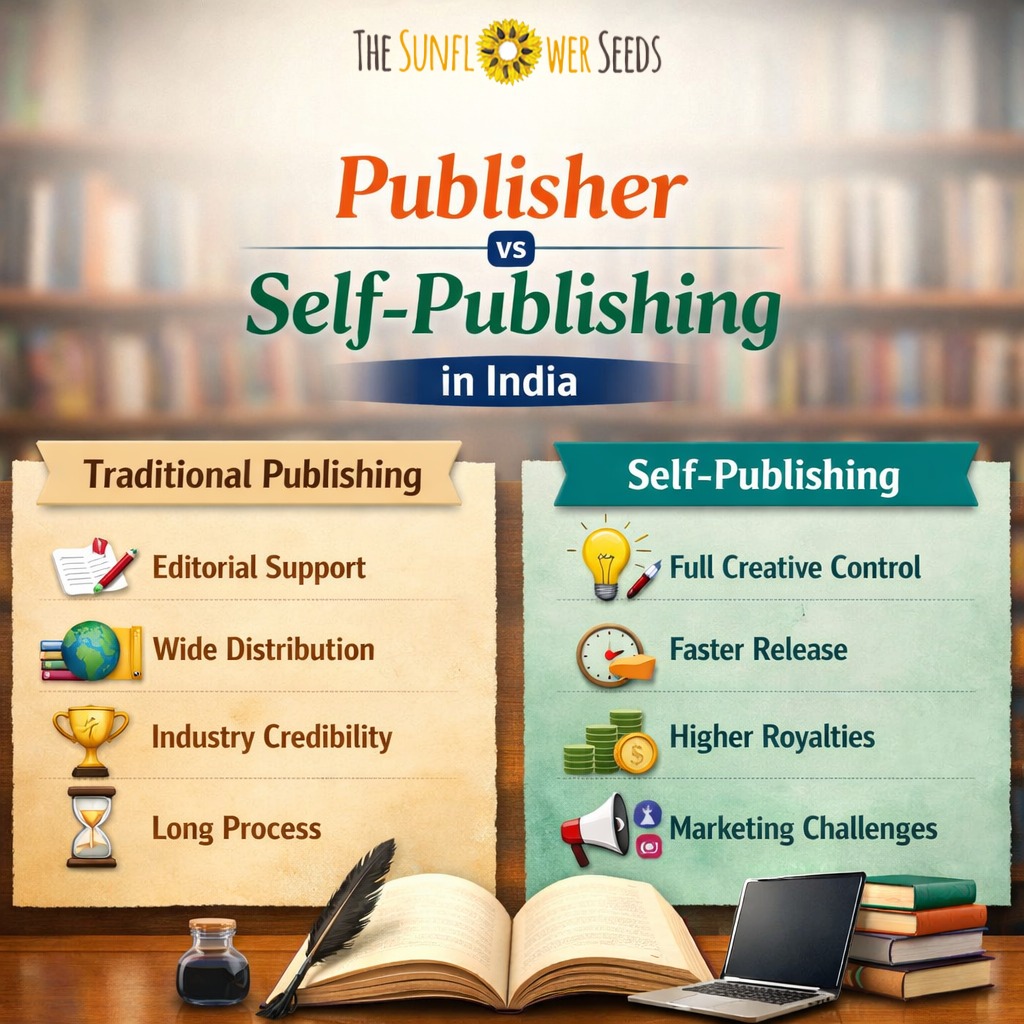
Key Differences Between Traditional Publishing and Self-Publishing
Understanding the differences between these two models is essential for making the right choice.
Control vs Support
Traditional publishing offers professional support but limits creative control.
Self-publishing provides complete control but requires authors to manage the process themselves.
Speed vs Selectivity
Traditional publishing is slower but more selective.
Self-publishing is faster but requires self-management.
Investment vs Risk
Traditional publishing involves no upfront cost but offers lower royalties.
Self-publishing requires investment but can provide higher returns.
Which Option Is Better for Authors in India?
There is no single answer to this question. The best choice depends on the author’s goals.
Choose Traditional Publishing If:
- You want professional support and credibility
- You prefer not to invest money upfront
- You aim for wide distribution in bookstores
- You are willing to go through a competitive selection process
Choose Self-Publishing If:
- You want full creative control
- You want to publish quickly
- You are willing to invest in your book
- You have a clear marketing strategy
The Hybrid Approach: A Growing Trend
Many authors today are combining both approaches. Some begin with self-publishing and later transition to traditional publishing, while others publish different types of books through different models.
This hybrid approach allows writers to balance creative freedom with professional support.
At The Sunflower Seeds, we help authors explore hybrid strategies that align with their long-term writing careers.
Common Mistakes Authors Make When Choosing a Publishing Path
Many writers struggle with this decision and make avoidable mistakes.
Choosing Without Research
Some authors select a publishing path without fully understanding the process.
Rushing to Publish
Publishing a book without proper editing and preparation can harm an author’s reputation.
Ignoring Marketing
Regardless of the publishing model, marketing plays a crucial role in a book’s success.
Underestimating the Process
Publishing requires planning, patience, and professionalism.
At The Sunflower Seeds, we guide authors in avoiding these mistakes and making informed decisions.
How Our Organisation Supports Authors in Both Paths
Every author’s journey is unique. Some writers aim for traditional publishing, while others prefer the independence of self-publishing.
At The Sunflower Seeds, we provide guidance for both paths.
- Manuscript development
- Editing and feedback
- Book proposal preparation
- Publishing strategy consultation
- Author development
We help writers understand not only how to publish a book but also how to build a long-term writing career.
The Future of Publishing in India
The Indian publishing industry continues to grow and evolve. Digital platforms, audiobooks, and global distribution channels are expanding opportunities for writers.
At the same time, competition is increasing. Authors must approach publishing strategically, whether they choose traditional publishing or self-publishing.
Writers who invest in quality, planning, and professional guidance are more likely to succeed in this environment.
At The Sunflower Seeds, we believe that every writer deserves the opportunity to share their story with the world. By providing structured guidance and editorial expertise, our organisation helps authors navigate the complexities of modern publishing.
Conclusion
Choosing between traditional publishing and self-publishing in India is one of the most important decisions an author will make.
Traditional publishing offers credibility, professional support, and wide distribution, while self-publishing provides creative freedom, faster timelines, and higher royalties.
Both paths have their advantages and challenges, and the right choice depends on the author’s goals and resources.
For aspiring writers, the key to success lies in preparation, understanding the industry, and making informed decisions.
With the right guidance and strategy, authors can navigate the publishing landscape and bring their books to readers across India and beyond.
At The Sunflower Seeds, we remain committed to helping writers choose the right path and succeed in their publishing journey.