

Mapping India’s Economic Journey: From 1947 to the Vision of 2047
India’s economic story is one of resilience, transformation, and ambition. From the struggles of Independence in 1947 to becoming one of the world’s fastest growing major economies today, the country’s journey reflects decades of policy shifts, innovation, and social change.
1947: A Nation Starting Almost From Scratch
When India gained Independence in 1947, the country inherited a deeply damaged economy after nearly two centuries of colonial rule. Industrial output was weak, literacy rates were extremely low, and poverty was widespread. Partition further disrupted trade, agriculture, and infrastructure.
At the time of Independence, India contributed less than 4 percent to the global economy despite once being one of the world’s richest regions during earlier centuries. Rebuilding the nation became one of the biggest economic challenges of the twentieth century.
The 1950s and 60s: The Socialist Model
In the decades after Independence, India adopted a state led economic model focused on self reliance and equality. The government controlled major industries, introduced Five Year Plans, and restricted imports to protect domestic production.
This period helped establish important public sector institutions, steel plants, dams, and scientific organisations. However, heavy regulation and licensing systems often slowed private enterprise and innovation. Economists later referred to this period as the “License Raj.”
Despite slow growth, these years laid the foundation for India’s industrial and institutional development.
The Green Revolution Changed Indian Agriculture
During the 1960s and 70s, India faced severe food shortages and dependence on imports. The Green Revolution transformed the country’s agricultural sector through high yield seeds, irrigation expansion, and modern farming techniques.
Punjab, Haryana, and western Uttar Pradesh became key centres of wheat production. By the 1970s, India moved much closer to food security and reduced the risk of famine.
The Green Revolution remains one of the most significant agricultural transformations in Indian history, although it also created long term concerns around groundwater depletion and soil health.
1991: Liberalisation Opened India to the World
One of the biggest turning points in India’s economic history came in 1991. Facing a balance of payments crisis, the country introduced major economic reforms that reduced government controls, encouraged private business, and opened markets to global competition.
These reforms changed the Indian economy dramatically. Foreign investment increased, industries expanded, and sectors like telecommunications, banking, and information technology saw rapid growth.
India’s GDP growth accelerated in the years that followed, helping create a growing middle class and new economic opportunities.
The 2000s: Technology and Rapid Growth
From the early 2000s onwards, India entered a phase of rapid economic expansion driven by technology, digital innovation, and entrepreneurship.
Cities like Bengaluru, Hyderabad, and Gurgaon emerged as global technology hubs. India also became a leader in digital payments and startup culture. Today, the country has one of the largest startup ecosystems in the world and is home to hundreds of millions of internet users.
Initiatives like Digital India, UPI, and Aadhaar further accelerated financial inclusion and digital access across the country.
The Challenges India Still Faces
Despite significant progress, India continues to face major challenges including inequality, unemployment, sustainability, and access to quality education and healthcare.
While economic growth has lifted millions out of poverty, balancing development with environmental sustainability and social equity remains critical for the future.
Looking Towards 2047
As India approaches 100 years of Independence in 2047, the conversation is increasingly focused on what kind of nation it wants to become. Can India continue growing while preserving its cultural identity and values?
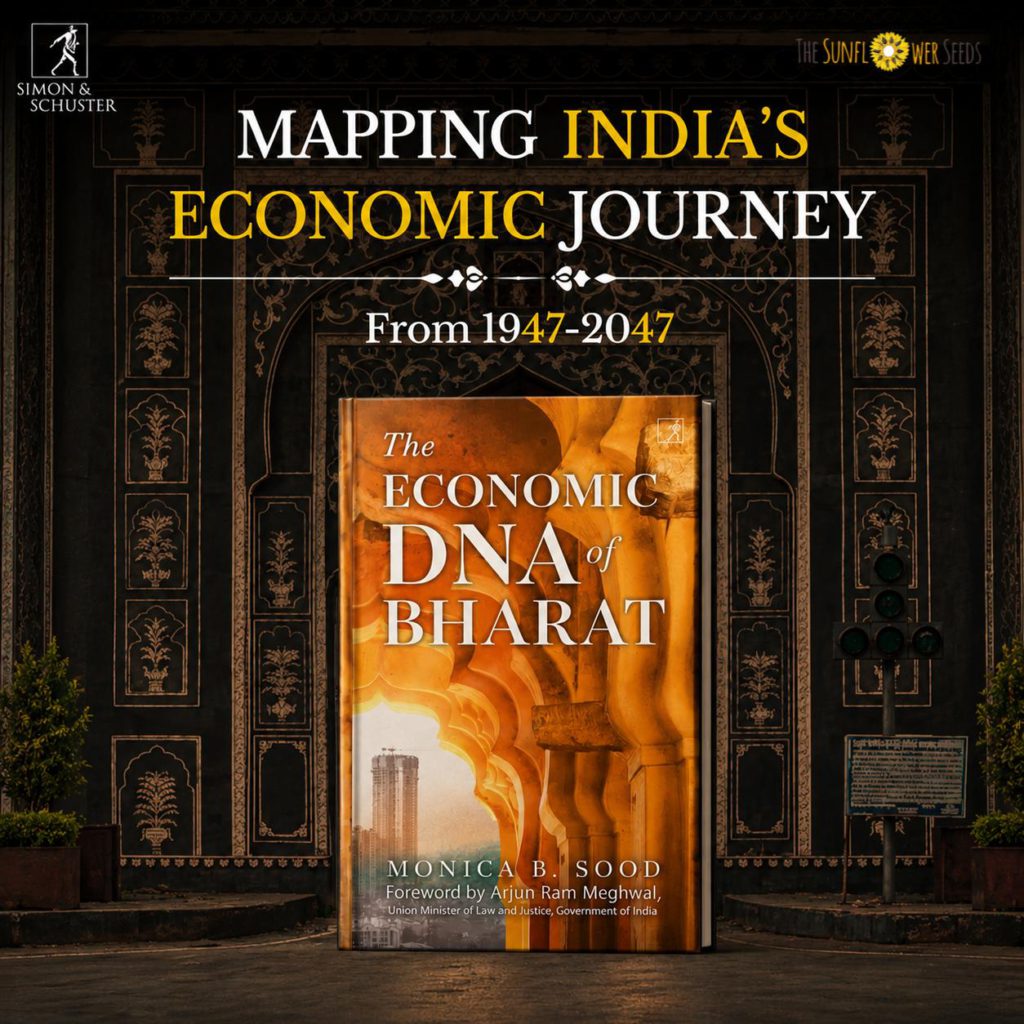
Books like The Economic DNA of Bharat explore these questions by examining India’s economic evolution alongside its civilisational and cultural foundations.
India’s economic journey is still unfolding, and the coming decades may define not only the country’s future, but also its role in the global economy.