

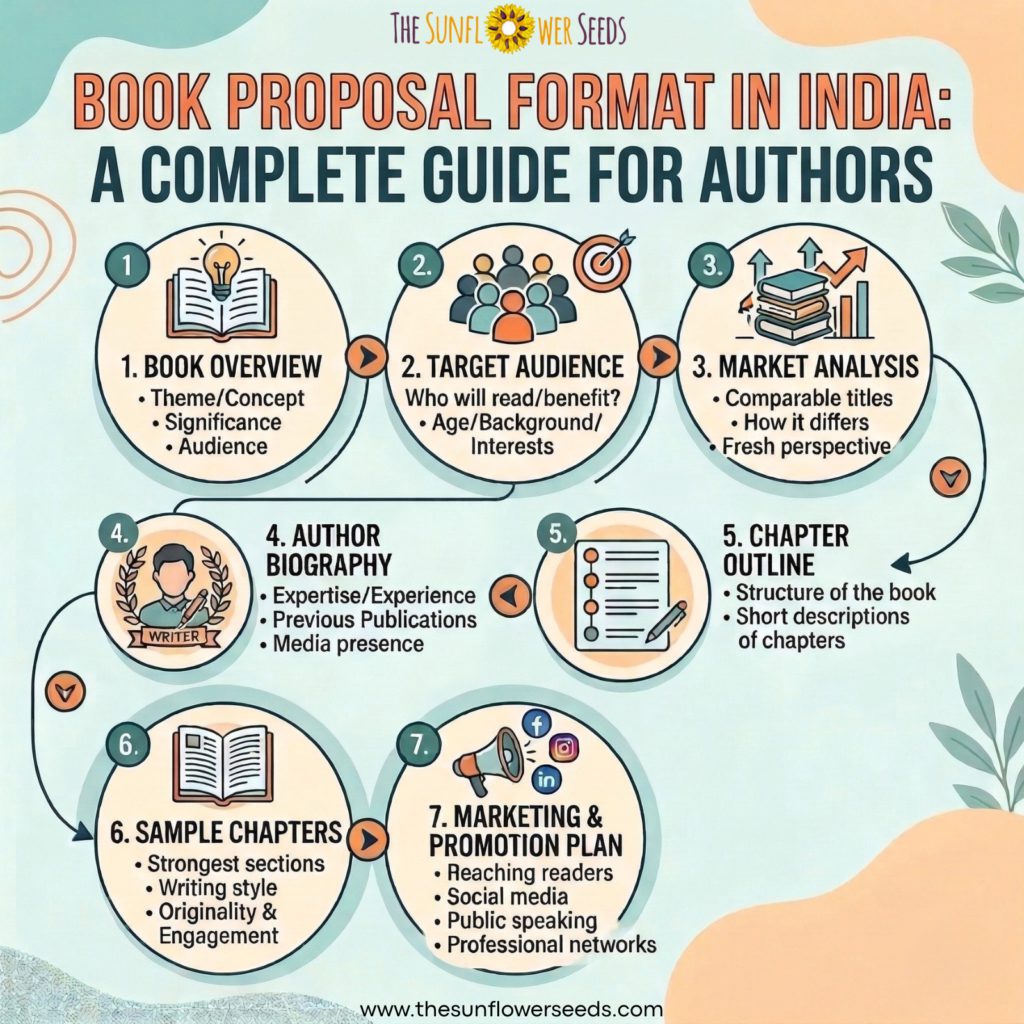
Book Proposal Format in India: A Complete Guide for Authors
Publishing a book begins long before a manuscript reaches a bookstore shelf. For many authors, especially those writing nonfiction, the first crucial step toward publication is preparing a strong book proposal. In the Indian publishing industry, a well-structured proposal can determine whether a manuscript captures the attention of editors, literary agents, and publishers.
Many aspiring writers assume that finishing a manuscript is the most important part of the publishing process. While a strong manuscript is essential, publishers often require a professional book proposal before they consider offering a publishing contract. A proposal helps publishers evaluate the concept, audience, and market potential of a book before investing time and resources into it.
In India, where the publishing landscape has expanded significantly in recent years, authors increasingly rely on professional guidance to prepare submission materials. Our organisation, The Sunflower Seeds, works closely with emerging writers to help them develop clear, compelling, and industry-ready book proposals that meet the expectations of modern publishers.
This guide explains the book proposal format in India, outlines each section in detail, and shows how authors can present their ideas in a professional way that attracts the attention of publishers.
What Is a Book Proposal?
A book proposal is a structured document that introduces a book idea to publishers or literary agents. Instead of submitting a full manuscript, authors often present a proposal that explains the concept of the book, its target audience, and its potential place in the market.
Publishers use proposals to answer several key questions:
- What is the book about?
- Who will read it?
- Why is it relevant now?
- Why is the author qualified to write it?
- How can the book reach readers?
In many cases, nonfiction books such as memoirs, business books, self-help titles, academic works, and narrative nonfiction are sold to publishers based on proposals alone.
Our organisation, The Sunflower Seeds, helps authors understand that a proposal is not simply a summary of the book. Instead, it functions as a strategic document that demonstrates both creative vision and market awareness.
Why Book Proposals Matter in the Indian Publishing Industry
The publishing industry in India has become increasingly competitive. Each year, publishers receive thousands of submissions from aspiring writers. Editors often have limited time to evaluate manuscripts, which is why a clear and professional proposal can make a strong first impression.
A well-prepared proposal allows publishers to quickly understand the book’s concept and potential.
For authors, this means that the proposal must communicate:
- A compelling idea
- A clearly defined readership
- A structured plan for the book
- The author’s credibility
Our organisation, The Sunflower Seeds, guides writers through this process by helping them organize their ideas into a proposal format that aligns with the expectations of Indian publishers.
Standard Book Proposal Format in India
While specific requirements vary between publishers, most proposals in India follow a similar structure. Understanding this format can help authors prepare professional submissions.
Below are the essential sections of a strong book proposal.
1. Book Overview
The overview is the opening section of the proposal and serves as the introduction to the book. This section explains the central idea of the book in a clear and engaging way.
A strong overview should include:
- The main theme or concept of the book
- The problem or question the book addresses
- The significance of the topic
- The intended audience
The goal of the overview is to immediately capture the editor’s attention. Within a few paragraphs, the reader should understand why the book matters.
At The Sunflower Seeds, authors are guided through the process of refining this section so that the core idea of their book is presented clearly and persuasively.
2. Target Audience
Publishers are interested not only in the content of a book but also in the readers it will reach. The target audience section identifies who is most likely to read the book.
Authors should consider questions such as:
- Who will benefit from this book?
- What age group or professional background does the audience belong to?
- What interests or challenges does this audience have?
For example, a book about entrepreneurship might appeal to young professionals, business students, or startup founders.
Our organisation, The Sunflower Seeds, works with authors to define their audience clearly, which helps publishers understand the potential market for the book.
3. Market Analysis
The market analysis section demonstrates that the author understands the existing landscape of books on the same topic.
This section usually includes:
- A list of comparable titles
- A brief discussion of how those books performed
- An explanation of how the proposed book is different
Publishers want to know that a book has a place in the market. If similar books exist, the proposal should explain how the new book offers a fresh perspective.
At The Sunflower Seeds, authors receive guidance on identifying relevant titles and positioning their work within the broader publishing landscape.
4. Author Biography
The author biography provides information about the writer’s background and expertise.
This section may include:
- Professional experience
- Educational background
- Previous publications
- Public speaking engagements
- Media presence
For nonfiction books, publishers often evaluate whether the author has credibility in the subject area.
Our organisation, The Sunflower Seeds, helps authors present their experience and expertise in ways that strengthen their proposals.
5. Chapter Outline
The chapter outline provides a detailed structure of the book. Instead of simply listing chapter titles, authors should include short descriptions explaining what each chapter will cover.
This section helps publishers understand how the book will develop its ideas.
A strong chapter outline demonstrates:
- Logical organization
- Narrative progression
- Depth of content
Through editorial consultations at The Sunflower Seeds, authors refine their chapter structures so that their proposals clearly communicate the scope and direction of their books.
6. Sample Chapters
Most publishers request one or two sample chapters as part of the proposal. These chapters allow editors to evaluate the author’s writing style and the quality of the content.
Sample chapters should represent the strongest sections of the book. They should demonstrate clarity, originality, and engagement.
Authors working with The Sunflower Seeds often receive feedback on these chapters to ensure that they meet professional publishing standards before submission.
7. Marketing and Promotion Plan
In today’s publishing environment, authors are often expected to participate in promoting their books.
The marketing section of the proposal describes how the author plans to reach readers.
This may include:
- Social media presence
- Public speaking opportunities
- Professional networks
- Media contacts
Our organisation, The Sunflower Seeds, works with authors to develop practical promotional strategies that strengthen their proposals and demonstrate commitment to the success of their books.
Common Mistakes Authors Make When Preparing Book Proposals
Many first-time writers struggle with the proposal process. Some of the most common mistakes include:
Submitting Incomplete Proposals
Many authors omit important sections such as market analysis or marketing strategies.
Writing Overly Long Summaries
Editors prefer clear and concise explanations rather than lengthy descriptions.
Ignoring the Target Audience
A proposal must identify specific readers rather than appealing to “everyone.”
Failing to Research Comparable Titles
Understanding the existing market is essential for positioning a book effectively.
Through editorial consultations at The Sunflower Seeds, authors learn how to avoid these mistakes and present professional proposals that reflect industry expectations.
How Our Organisation Helps Authors Prepare Book Proposals
Preparing a strong book proposal requires both creativity and strategic thinking. Many writers have compelling ideas but struggle to organize them into a format that publishers expect.
Our organisation, The Sunflower Seeds, supports authors through every stage of the proposal development process.
Writers working with our organisation often receive assistance with:
- Developing clear book concepts
- Structuring proposal documents
- Refining chapter outlines
- Preparing sample chapters
- Identifying suitable publishers
By focusing on both creative development and publishing strategy, The Sunflower Seeds helps writers transform early ideas into professional proposals ready for submission.
The Future of Book Publishing in India
India’s publishing industry continues to evolve as digital platforms, audiobooks, and international collaborations expand the reach of Indian authors.
At the same time, competition among writers continues to grow. Publishers must carefully evaluate which projects to support, making well-prepared proposals more important than ever.
In this environment, authors who understand the proposal process and prepare professional submissions have a clear advantage.
Through its work with emerging writers, The Sunflower Seeds contributes to the development of new voices in Indian literature and helps authors navigate the increasingly complex world of publishing.
Conclusion
A book proposal is often the first step toward securing a publishing opportunity. By clearly presenting the concept, structure, and market potential of a book, a proposal helps publishers evaluate whether a project is worth pursuing.
For aspiring authors in India, learning how to prepare a professional proposal is an essential skill.
With the right guidance, preparation, and persistence, writers can transform their ideas into compelling proposals that capture the attention of editors and publishers.
Through its commitment to supporting writers, The Sunflower Seeds continues to help authors develop professional proposals and navigate the path toward publication in India’s growing literary landscape.