
From First Draft to Public Impact: What Aspiring Authors Can Learn from Dr. Monica B. Sood’s Publishing Journey
For many aspiring writers, publishing a book feels like a distant goal. Turning years of research, ideas, and experience into a finished manuscript can seem overwhelming. Yet every author starts the same way, with a blank page.
Dr. Monica B. Sood’s publishing journey to The Economic DNA of Bharat shows that expertise alone does not create a book. It takes commitment, persistence, and the courage to share ideas with a wider audience.
Her experience offers valuable lessons for anyone considering writing a book of their own.
Why Writing a First Book Matters
Writing a book is very different from creating articles, reports, or social media content. It requires developing a complete argument, maintaining consistency, and presenting complex ideas in an engaging and accessible way.
In The Economic DNA of Bharat, Dr. Sood examines India’s economic evolution through history, culture, policy, technology, and civilisational thought. The book explores how the nation’s past influences its future and presents a vision for Bharat’s growth in the years ahead.
For first-time authors, her journey highlights an important truth: successful books are often built at the intersection of expertise and storytelling.
The Challenge of Turning Knowledge into a Book
A common misconception is that experts can easily write books. In reality, book writing demands a different skill set from academia, business, or public policy.
Authors must organise information effectively, simplify complex concepts, and maintain a narrative that keeps readers engaged. This often means revising drafts repeatedly, seeking feedback, and refining ideas before publication.
The process develops patience, discipline, and communication skills that remain valuable long after the book is released.
Publishing Is Only the Beginning
Many writers believe the hardest part ends when the manuscript is published. In truth, publication marks the beginning of a book’s public life.
Authors often engage with readers, participate in discussions, attend events, and continue promoting the ideas behind their work.
Dr. Sood’s experience reflects this reality. Since publishing The Economic DNA of Bharat, she has actively contributed to conversations around the book’s themes, helping its ideas reach broader audiences.
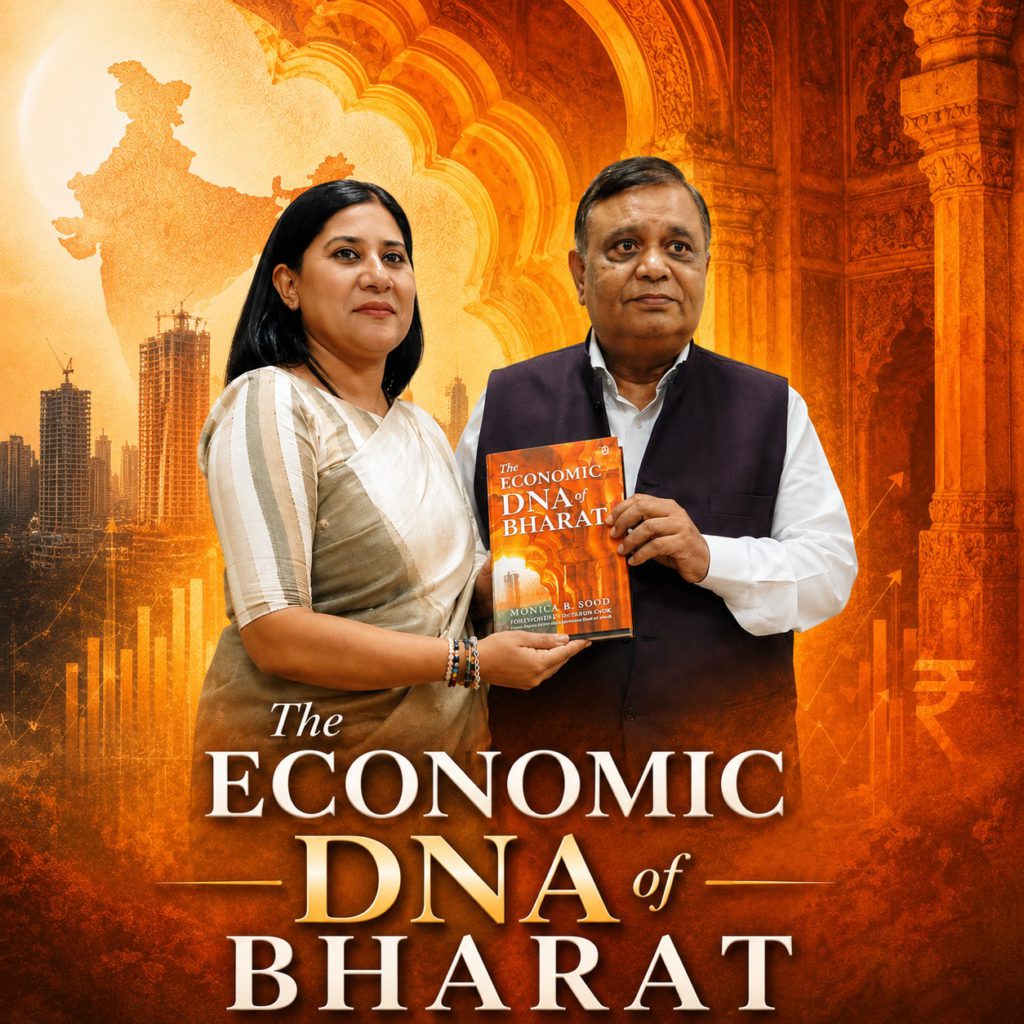
Presenting The Economic DNA of Bharat to Ghaziabad MP Shri Atul Garg
A notable milestone in the book’s journey was when Dr. Monica B. Sood presented a copy of The Economic DNA of Bharat to Shri Atul Garg, Hon’ble Member of Parliament from Ghaziabad.
Such moments demonstrate how books can influence conversations beyond literary circles. They can contribute to discussions involving policymakers, educators, industry leaders, and citizens.
For authors, this is a powerful reminder that a book is not only a publication but it can also serve as a platform for meaningful dialogue and the exchange of ideas.
Lessons for Aspiring Authors
Whether you are a professional, entrepreneur, researcher, or student, there are several key takeaways from Dr. Sood’s publishing journey:
1. Start with a subject you genuinely care about
Writing a book requires sustained effort. Passion for the topic helps maintain motivation throughout the process.
2. Focus on creating value
Readers are drawn to books that educate, inspire, or provide meaningful insights.
3. Expect multiple revisions
The first draft is rarely the final version. Revision is where strong manuscripts become impactful books.
4. Build conversations around your work
Publishing is not just about releasing a book. It is about sharing ideas and engaging with readers.
5. Think long term
A book can create opportunities for speaking engagements, partnerships, media appearances, and broader influence.
Final Thoughts
Dr. Monica B. Sood’s publishing journey from first-time author to published writer demonstrates the enduring power of books to share knowledge and shape public conversations.
Her experience shows that publishing is not limited to career writers. Anyone with expertise, a compelling idea, and the dedication to follow through can create a book that informs, inspires, and makes an impact.
And sometimes, that journey can lead from a blank page to meaningful conversations with readers, leaders, and policymakers across the country.