
Why Book Marketing Matters More Than Ever
Many authors believe that if a book is good enough, readers will automatically find it. It is a comforting idea, but it is not how publishing works today.
A strong book is still the foundation of success. Good writing, original ideas, and a clear message matter most. But in a crowded publishing market, a good book also needs visibility. Readers cannot buy, recommend, or talk about a book they have never discovered.
This is why book marketing has become such an important part of modern publishing. It helps a book reach the right audience, build trust, create conversations, and stay relevant beyond the launch week.
What Is Book Marketing?
Book marketing is not just about posting “Buy my book” on social media. A good book marketing strategy helps readers understand what the book offers and why it matters.
At its core, book marketing answers a few key questions:
What is the book about?
Who is it written for?
Why should readers care?
What problem, emotion, or curiosity does it address?
Why is the author the right person to write it?
For example, a business book should not only be promoted as “a book about business.” It can be positioned around leadership, entrepreneurship, productivity, workplace culture, or financial growth.
Similarly, a memoir is not just someone’s life story. It can be marketed around resilience, identity, healing, transformation, or personal growth.
Good marketing gives a book a clear identity. It tells readers where the book fits into their lives.
Why Good Books Still Need Marketing
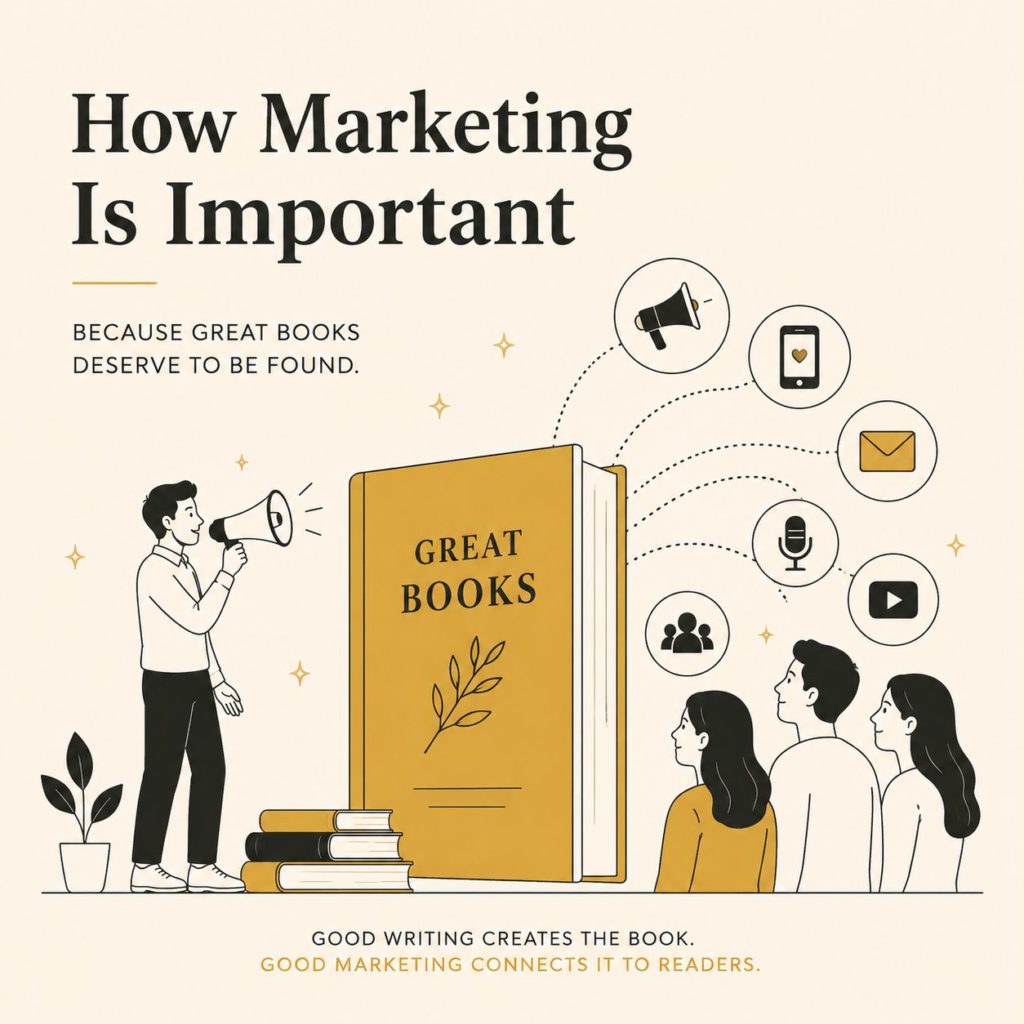
One of the biggest myths in publishing is that “a good book sells itself.” In reality, even excellent books can go unnoticed without the right visibility.
Today, readers discover books through many different platforms, including:
Instagram and LinkedIn
Book reviews
Author interviews
Podcasts
Media coverage
Influencer recommendations
Bookstore displays
Reader communities
Email newsletters
Launch events
Each channel helps the book reach a different type of reader. Some people may discover a book through a reel. Others may come across it through a podcast, a newspaper feature, or a recommendation from someone they trust.
The goal of book marketing is not to be everywhere. The goal is to be visible in the right places.
Why Author Branding Matters
In today’s publishing industry, readers often connect with the author before they decide to buy the book. This is why author branding has become a key part of book promotion.
Author branding means creating a clear, consistent, and authentic public presence around the author’s voice, ideas, and expertise.
This can include:
LinkedIn posts on the book’s themes
Instagram content about the author’s journey
Short videos explaining key ideas
Blogs or articles on related topics
Podcast interviews
Media features
Behind-the-scenes content
This does not mean every author needs to become an influencer. It simply means the author should be discoverable, credible, and easy for readers to connect with.
What A Good Book Marketing Strategy Should Include
A successful book promotion strategy should begin before the book is released. Waiting until launch day often makes it harder to build momentum.
1. Pre-Launch Marketing
Before the book is available, the goal is to build curiosity and awareness.
This can include:
Cover reveal
Author introduction
Theme-based posts
Early reviews
Pre-order announcements
Quotes from the book
Short videos explaining the core idea
Pre-launch marketing helps readers become familiar with the book before they are asked to buy it.
2. Launch Campaign
During the launch period, the focus should be on visibility, credibility, and momentum.
A strong launch campaign can include:
Media coverage
Influencer collaborations
Launch event content
Reader testimonials
Bookstore availability updates
Author interviews
Social media reels and carousels
The launch campaign should clearly answer one question: why should someone pick up this book now?
3. Post-Launch Marketing
Many books lose visibility after the first few weeks. This is where long-term marketing becomes important.
Post-launch content can include:
Reader reviews
Book club discussions
Podcast clips
Author opinion pieces
Blogs based on the book’s themes
Social media posts around key takeaways
A book’s life should not end after launch week. With consistent marketing, a book can stay relevant for months or even years.
Final Thoughts
The idea that “a good book sells itself” is one of the biggest myths in publishing.
A good book needs strong writing, but it also needs visibility, positioning, and a clear marketing strategy. In today’s crowded market, readers need to discover a book before they can appreciate it.
Book marketing does not replace good writing. It supports it.
At its best, book marketing is about helping the right readers find the right book at the right time.
Because great books deserve to be read, talked about, and remembered.