
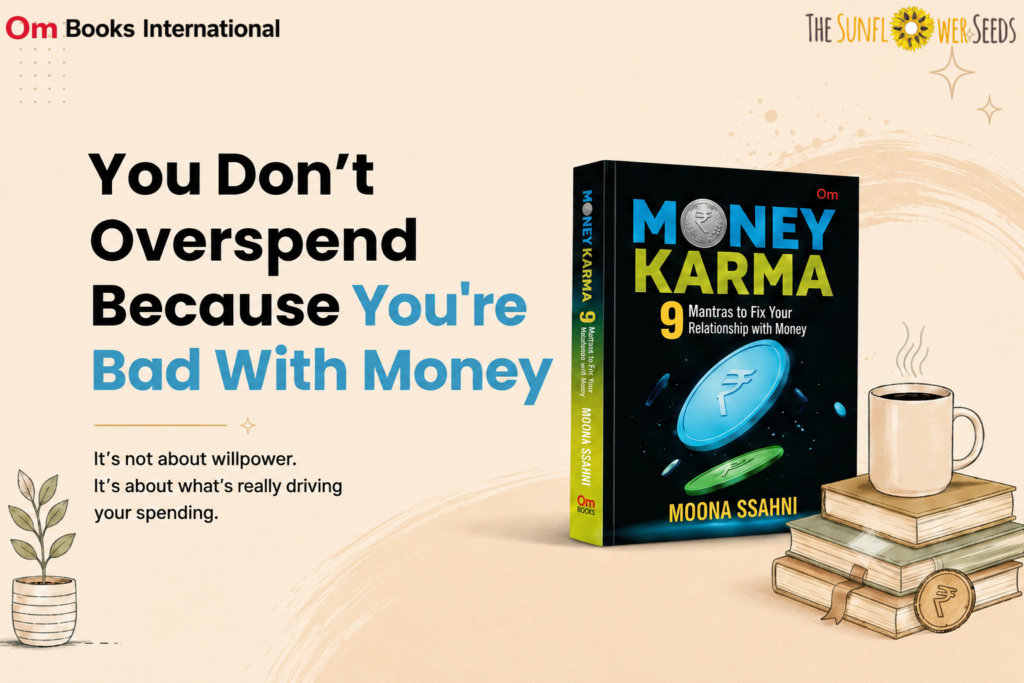
You Don’t Overspend Because You’re Bad With Money | Money Karma
You open your banking app at the end of the month and feel that familiar sinking feeling. The numbers don’t add up the way you expected them to. You scroll through the transaction history, trying to spot the one big purchase that explains it all – but there isn’t one. Instead, there’s a long trail of small, seemingly harmless charges: a coffee here, a food delivery order there, a subscription you forgot you even signed up for.
The instinctive conclusion most people reach is, “I’m just bad with money.” But that’s rarely the real story.
Your money isn’t misbehaving. It’s mirroring your mood.
Financial behavior is rarely just financial. Most overspending doesn’t begin with poor budgeting skills or a lack of discipline — it begins with emotional spending, those moments when your feelings quietly take the lead instead of your judgment. And because it happens quietly, in small increments, it’s easy to miss until you’re staring at a statement that doesn’t make sense.
So what does emotional spending actually look like in everyday life? A few familiar triggers show up again and again:
- Convenience: ordering in because cooking after a long day feels like one task too many
- Comfort: a purchase that offers a small emotional cushion on a hard day
- FOMO: spending because everyone around you seems to be doing it, and staying out feels worse than spending
- Fatigue: buying on autopilot simply because you’re too mentally drained to pause and think it through
Here’s the important part: none of these purchases are inherently wrong. A coffee run isn’t a financial crime. A cab ride home when you’re exhausted isn’t a failure of willpower. The real issue isn’t the purchase itself – it’s making that choice unconsciously, over and over, without ever noticing the pattern behind it.
Asking the right question
Most of us only ever ask one question about our spending: “Where did my money go?” It’s a natural place to start, but it’s also where most people stop — and that’s exactly why the same patterns keep repeating month after month.
There are two more questions worth asking:
- Where did my money go?
- Why did it go there?
- How do I want to feel about it next time?
That second question forces you to look past the transaction and toward the trigger behind it. And the third is where real change begins — because it shifts the focus from guilt over what already happened to intention about what happens next.
Awareness over shame
It’s tempting to treat financial clarity as a matter of stricter budgets, harsher self-criticism, or cutting things out entirely. But shame rarely creates lasting change — it just adds another layer of stress to an already stressful relationship with money. Awareness does the opposite. Every time you notice a spending pattern instead of judging it, you take a small step toward a healthier relationship with your finances.
The goal isn’t to stop spending. It’s to start choosing.
This idea sits at the heart of Money Karma: 9 Mantras to Fix Your Relationship with Money by Moona Ssahni, published by Om Books International. Rather than offering another rigid budgeting formula, the book explores the emotional patterns behind our financial choices — helping readers move from reactive spending to deliberate, conscious decisions.
If your bank statement has ever felt like a mystery, Money Karma might be the book that finally helps you read between the lines.
If you’re looking for expert help tailored to your genre, audience, and personality, The Sunflower Seeds offers everything from media outreach and blog strategy to YouTube content and SEO marketing for authors. We’ve helped several emerging voices find their tribe – and we’d love to help you, too.
Ready to market your book the smart way?
Avoid the rookie errors – embrace strategy, storytelling, and support.
Because great books deserve great readers