
Why Fiction Sells on Feeling, Not Facts | TSS
Fiction is the hardest genre to market with data alone. There’s no framework to summarise, no ROI to promise a reader – the “why buy” is almost entirely emotional and aesthetic. So when a first-time novelist sits down to market a novel, the instinct to explain the plot, list the themes, or lean on credentials usually works against them. Readers aren’t evaluating a pitch. They’re deciding whether they want to live inside this world for a few hundred pages.
That single shift changes everything about how a debut should be marketed.
Sell the World, Not the Summary
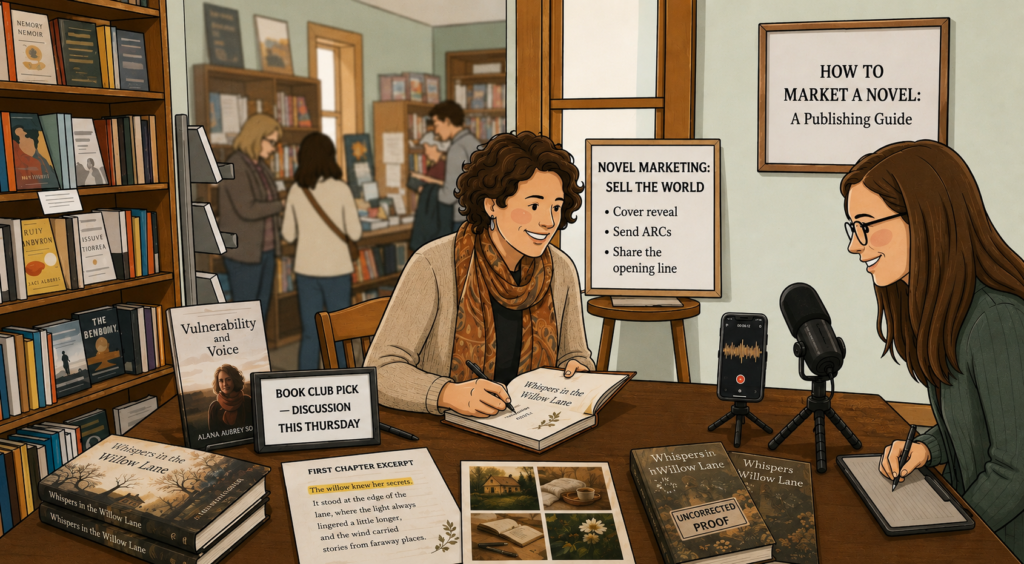
Cover reveals, mood boards, and playlists tied to the story do more to market a novel than any plot synopsis ever will. A striking cover signals genre and tone before a reader has read a single line. A well-chosen aesthetic — the colours, the font, even a curated Spotify playlist “for the book” — gives readers something to feel before they’re asked to buy anything.
Treat every piece of pre-launch content as a preview of the experience, not a description of the plot. Readers should walk away thinking “I want to be inside that,” not “I understand what happens.”
ARCs Are Non-Negotiable
Advance reader copies sent to book bloggers, Bookstagram accounts, and BookTok reviewers are the real distribution engine for fiction. Author-led promotion rarely converts strangers into readers. Recommendations from trusted reader communities do.
This is where the numbers back up the instinct. In India, fiction revenue grew by roughly 30% in a single year, with BookTok cited as a major driver behind that growth, according to a joint report from NielsenIQ BookData and GfK Entertainment. Romance, fantasy, and crime fiction saw the sharpest gains — genres where reader communities, not publishers, decide what breaks out.
Sending galleys out two to three months before launch, tracking who’s posted, and following up gently is unglamorous work. But it’s the difference between a launch day with zero reviews and one with thirty.
Let the Writing Speak
Excerpts and first-line teasers consistently outperform full plot summaries. A strong opening line, shared as a standalone post, does more to hook a reader than a paragraph explaining the premise. Voice and atmosphere sell fiction; plot summaries rarely do.
This also means spoiler discipline matters more here than in any other genre. Share the feeling of chapter one. Don’t give away chapter twelve.
Bookstores and Book Clubs Still Matter
Independent bookstores and reading groups punch above their weight for debut fiction. A staff pick at a local store, a short reading-group discussion guide at the back of the book, or an event tied to a book club can do more for a first-time author than a wide ad campaign. These are smaller audiences, but they’re deeply engaged ones — and they talk.
Word of Mouth Is the Real Launch
A novel’s sales curve is slower than a business book’s. It builds over months, through recommendations, not through a single launch-week spike. That’s worth planning for from the start: staggered reviews, a rolling calendar of blog and podcast mentions about the writing process (never the plot), and patience with a slow build rather than panic if week one looks quiet.
Pre-order counts and Goodreads “want to read” numbers are worth tracking here, the way email signups matter for other genres — not as vanity metrics, but as an early read on whether the world being built is actually pulling readers in before the book ever reaches shelves.
If you’re looking for expert help tailored to your genre, audience, and personality, The Sunflower Seeds offers everything from media outreach and blog strategy to YouTube content and SEO marketing for authors. We’ve helped several emerging voices find their tribe – and we’d love to help you, too.
Ready to market your book the smart way?
Avoid the rookie errors – embrace strategy, storytelling, and support.
Because great books deserve great readers